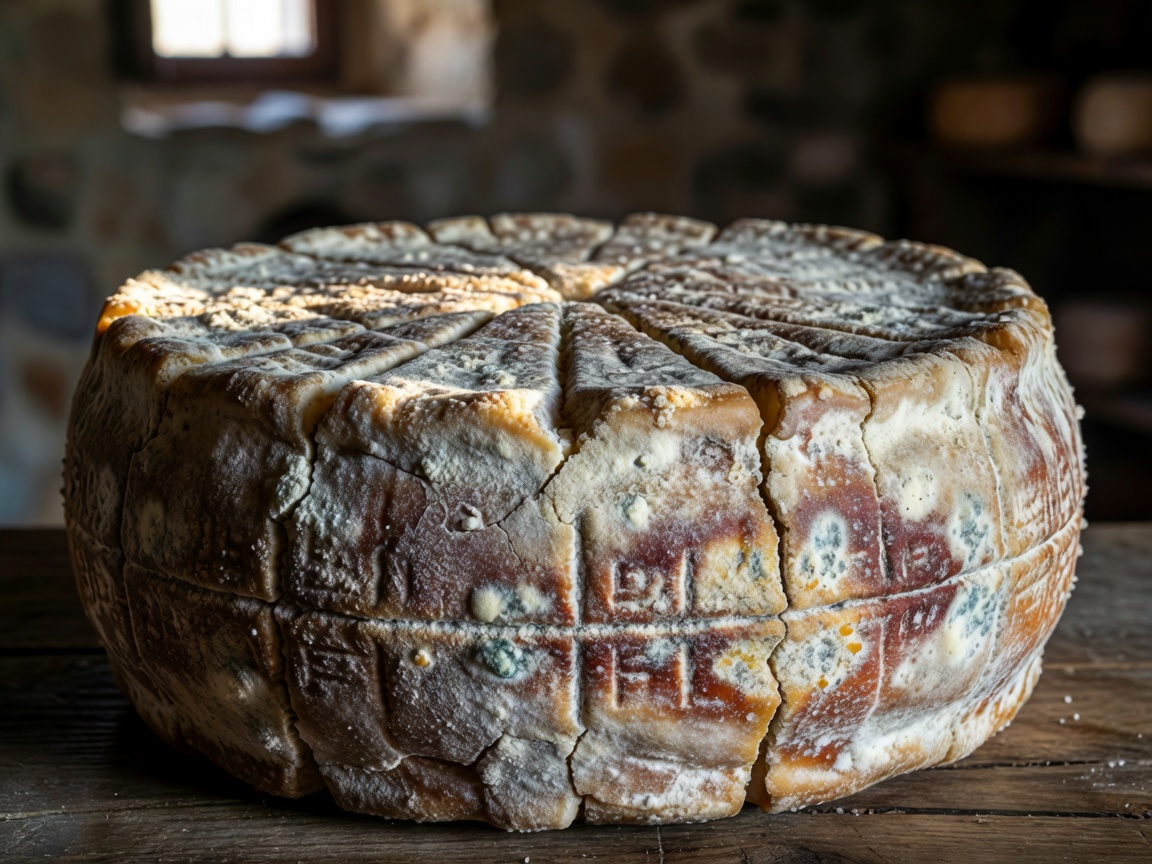
High in the rugged mountain villages of Sardinia, shepherds continue a practice centuries old: producing Casu Marzu (literally "rotten cheese"). While commercial sale is strictly prohibited under European Union hygiene regulations, this legendary delicacy remains deeply rooted in local Sardinian heritage.
How Casu Marzu Is Created
The process begins with Pecorino Sardo, a salty cheese made from sheep's milk. Instead of being stored in a cool cellar to age cleanly, wheels of Pecorino are left outside with part of the rind removed. This invites the cheese fly (Piophila casei) to lay hundreds of eggs inside the wheel.
As the larvae hatch, they consume the cheese fats. The digestive enzymes produced by the maggots break down the fats at an accelerated rate, turning the firm cheese into a soft, liquid-like cream. When opened, thousands of translucent larvae up to 8 millimeters long can be seen writhing within the core.
Scientific Overview & Specs
Primary Fly Species: Piophila casei
Legal Status: Illegal for commercial sale in EU since 2002; protected under traditional food exemption requests.
Flavor Profile: Intensely pungent, burning aftertaste comparable to ripe Gorgonzola mixed with ground black pepper and ammonia.
How It Is Traditionally Consumed
Locals typically slice the top of the cheese wheel off like a lid and scoop the creamy paste onto thin Sardinian flatbread (Pane Carasau), accompanied by a strong glass of local Cannonau red wine.
A critical rule among connoisseurs: the maggots must be alive when consumed. Dead maggots usually indicate the cheese has spoiled beyond safe consumption levels. Because the larvae can leap up to 15 centimeters (6 inches) when disturbed, diners often cover the sandwich with their hands to prevent maggots from jumping into their eyes.
Health Concerns & Regulatory Ban
The European Food Safety Authority (EFSA) declared Casu Marzu illegal due to risks of pseudomyiasis—a condition where fly larvae survive stomach acid and colonize the intestinal tract. Despite this, local Sardinians view the cheese as an aphrodisiac and traditional delicacy, continuing underground production for personal consumption.
Official EU Food Standards Documentation →