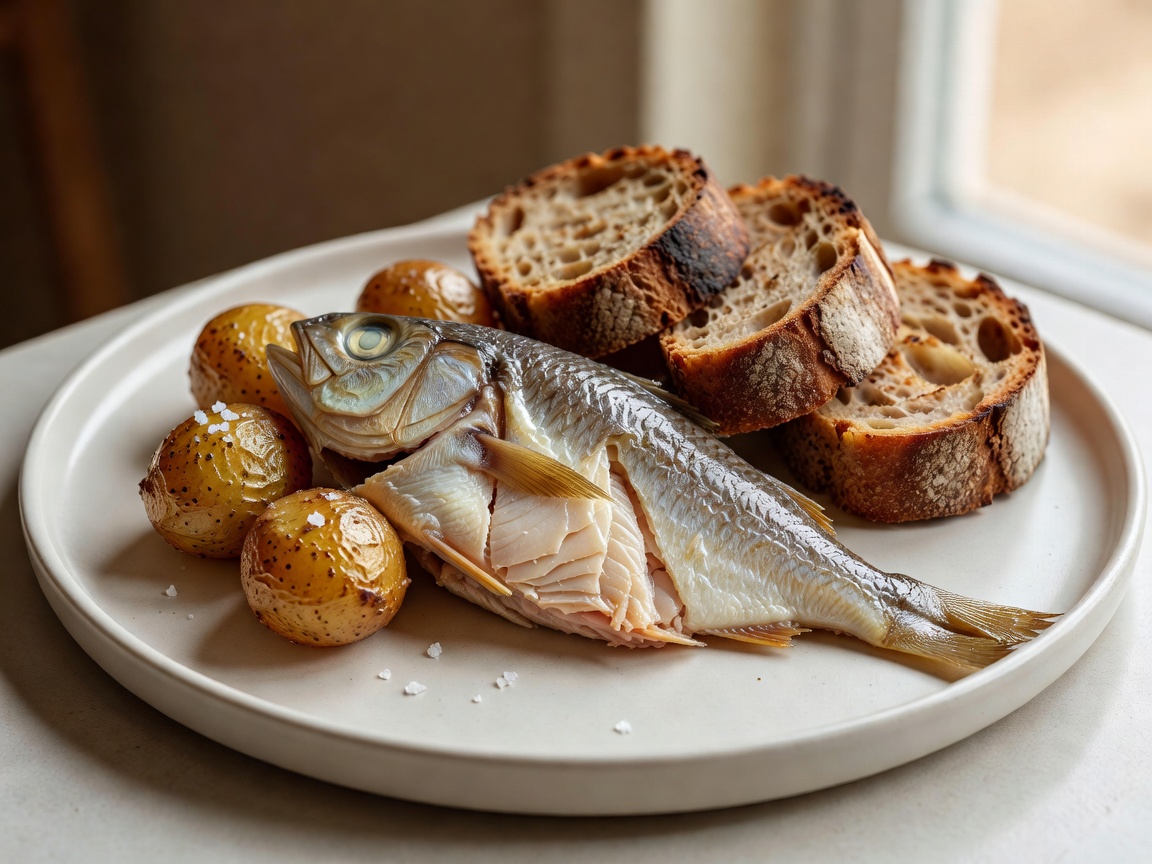
Surströmming is lightly salted fermented Baltic Sea herring. Originating in the 16th century during Swedish military campaigns when salt supplies were scarce, this process preserved fish with minimal brine to prevent outright decay while encouraging anaerobic fermentation.
Biochemistry Behind the Scent
During the fermentation process, Haloanaerobium bacteria produce compounds including propionic acid (pungent vinegar smell), butyric acid (rancid butter aroma), and hydrogen sulfide (rotten egg odor). The continuous gas release causes the tin cans to bulge dramatically over time.
Surströmming Key Facts
Airlines Ban: Major carriers including British Airways and Air France ban Surströmming cans due to pressure explosion risks.
Traditional Opening Method: Opened underwater in a bucket outside to prevent spray and minimize gas dispersal.
How to Properly Serve Surströmming
Experienced Swedes rarely eat the fish plain. It is served as a sandwich called surströmmingsklämma composed of thin flatbread (tunnbröd), butter, sliced boiled almond potatoes (mandelpotatis), finely chopped red onions, and sour cream (gräddfil).