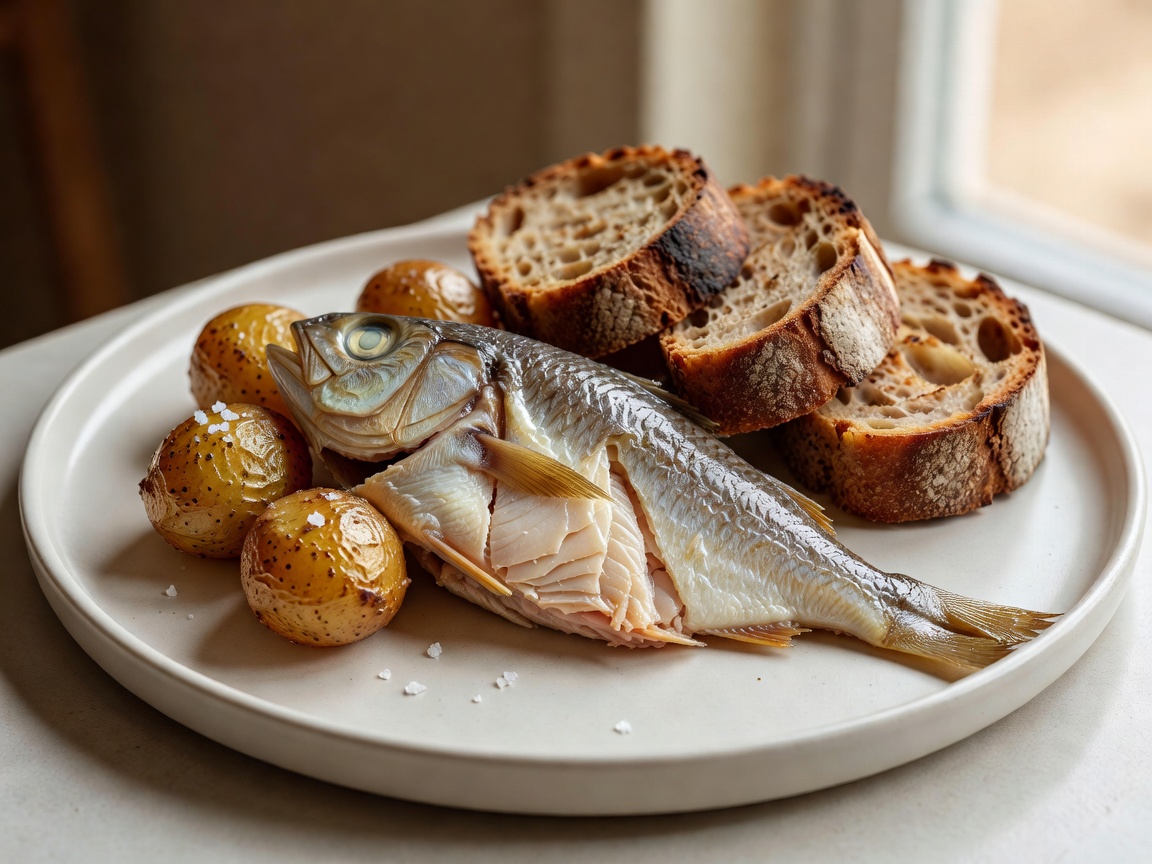
Surströmming is a long-standing northern Swedish culinary tradition of lightly salted fermented Baltic Sea herring. Caught just before spawning in spring, the fish is brined in strong salt water for 20 hours, then transferred to a milder solution to ferment at ambient temperatures for months before tinning.
The Chemistry of Pungency
During the tinning process, haloanaerobic bacteria including Haloanaerobium species break down fish proteins and glycogen. This anaerobic microbial activity releases volatile sulfur compounds, including propionic acid (pungent vinegar-like smell), butyric acid (rancid butter note), and hydrogen sulfide (rotten egg aroma).
Because the fermentation continues inside the sealed steel cans, pressure builds up to the point where the top and bottom of the can bulge noticeably. Many major airlines explicitly ban Surströmming cans on flights due to concerns over pressurized pressurized vessel hazards.
How To Eat Surströmming Properly
Surströmming is rarely consumed plain straight from the can. Swedes open the tin submerged under a bucket of clean water to suppress gas release. The fish is then served inside a sandwich (klämma) made of thin flatbread (tunnbröd), spread with butter, sliced boiled almond potatoes, diced red onions, and sour cream (gräddfil).
Cultural Heritage & August Feasts
Despite its reputation on social media, Surströmming is revered as a historical necessity that preserved vital protein for Scandinavian villagers through harsh winter seasons. The third Thursday of August marks surströmmingspremiär, when the year's batch is officially released for public gathering across Sweden.